$108.90
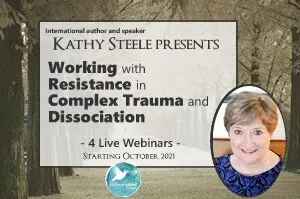
This training is designed for psychologists, counsellors, psychotherapists, social workers, mental health clinicians and other trauma-informed practitioners who work with clients experiencing complex trauma, dissociation, attachment disruptions, and therapeutic resistance. It is particularly relevant for clinicians seeking advanced professional development in trauma therapy and dissociative disorders.
In the context of complex trauma and dissociation, resistance is often a protective survival response rather than client opposition. This training explores how resistance may reflect parts-based dynamics, attachment trauma, nervous system dysregulation, and dissociative coping strategies, and teaches clinicians how to respond with attunement rather than confrontation.
The training provides a clinically grounded framework for understanding structural dissociation, parts work, and trauma-related dissociative responses. Participants learn practical strategies for recognising dissociation in session, maintaining therapeutic safety, and working collaboratively with protective parts that may appear resistant.
Participants will develop skills in:
Identifying different forms of therapeutic resistance in trauma work
Responding to shutdown, avoidance, and defensive patterns
Working safely with dissociation and fragmentation
Strengthening therapeutic alliance with complex trauma clients
Applying trauma-informed and attachment-informed interventions
The course focuses on immediately applicable clinical tools rather than purely theoretical concepts.
This course is best suited to practitioners who already have foundational knowledge in trauma-informed practice. While key concepts are explained clearly, the content is designed as advanced trauma training for clinicians wanting to deepen their understanding of resistance and dissociation in therapy.
Misinterpreting resistance as non-compliance can damage the therapeutic relationship. In complex trauma work, resistance often signals fear, shame, attachment wounds, or protective dissociative parts. Learning to recognise and work with these responses improves treatment outcomes, client safety, and long-term therapeutic progress.
The course is offered through Hummingbird Centre, a specialist provider of trauma and dissociation training in Australia. Practitioners should check with their relevant professional body regarding CPD recognition requirements.
Unlike general trauma workshops, this training specifically focuses on the intersection of resistance, complex trauma, and dissociation. It explores why traditional approaches may stall with highly traumatised clients and offers nuanced, attachment-informed and parts-informed alternatives.