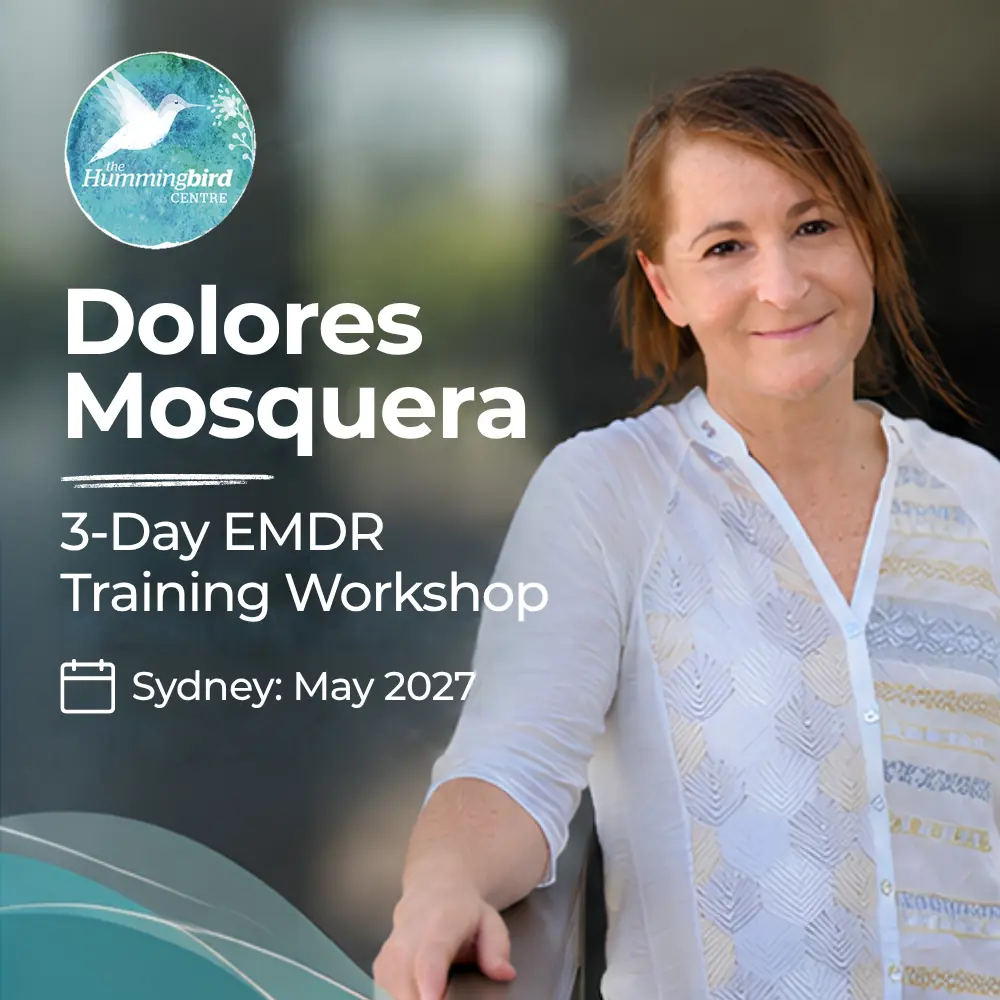


May 17, 2027 @ 8:00 am – May 19, 2027 @ 4:00 pm
Training Details
Dates: Monday 17 – Wednesday 19 May 2027
Times: 8:00am – 4:00pm daily (registration opens at 8:00am)
Venue: InterContinental Double Bay @ 33 Cross Street, Double Bay, NSW
Daily Schedule:
- 8:00–9:00am | Registration (Tea & Coffee)
- 9:00–10:30am | Training
- 10:30–11:00am | Morning Tea
- 11:00am–12:30pm | Training
- 12:30–1:30pm | Lunch
- 1:30–2:45pm | Training
- 2:45–3:00pm | Afternoon Break
- 3:00–4:00pm | Training
Somatoform dissociation is characterised by physical symptoms and functional impairments that cannot be fully explained by medical findings alone. These presentations frequently include disturbances involving movement, speech, sensation, vision, pain, seizures, or other bodily functions that reflect unresolved traumatic experience expressed through the body rather than through explicit verbal memory.
Clients with somatoform dissociation are often highly misunderstood within mental health and medical systems. Many receive multiple diagnoses, extensive medical evaluations, and ineffective interventions before the dissociative and trauma-related nature of their symptoms is recognised. In many cases, these symptoms represent dissociated sensory, emotional, and procedural aspects of unresolved traumatic experiences, including childhood abuse, neglect, attachment trauma, and chronic relational invalidation.
Although many clients with somatoform dissociation do have dissociative parts, these parts often present differently from the more clearly differentiated presentations commonly seen in other dissociative disorders. As a result, the usual exploration tools and interventions used to identify and work directly with dissociative parts may become blocked or provide limited access to the underlying dissociative organisation. Rather than appearing as clearly identifiable dissociative parts, the internal conflict is more frequently expressed through bodily symptoms, over-regulation, confusion, or diminished emotional and somatic awareness.
These clients commonly present with alexithymia, emotional disconnection, cognitive rationalisation, low mental efficiency, and limited awareness of internal experience. Some may appear highly functional while remaining profoundly disconnected from their emotional and bodily experience.
Standard EMDR procedures may therefore become blocked or ineffective if treatment focuses primarily on explicit narrative memory. Many clients experience “stuck points” in therapy, moments in which processing becomes repetitive, intellectually driven, emotionally disconnected, or unable to progress. In these situations, the body itself may provide the most accessible pathway into dissociated traumatic material.
This workshop will present a practical and clinically grounded approach to understanding and treating somatoform dissociation with EMDR therapy. Special attention will be given to the use of “unspecific blockages” and somatic stuck points as treatment targets when clients are unable to verbalise, understand, or emotionally access the underlying traumatic material.
Participants will learn how to:
- Recognise common presentations of somatoform dissociation
- Identify over-regulation and the ways it interferes with reprocessing
- Understand the concept of stuck points in dissociative clients
- Use body-based awareness to identify dissociative blockages
- Apply modified EMDR interventions when standard processing becomes blocked
- Increase mental efficiency and integrative capacity through bilateral stimulation
- Gradually access traumatic material without exceeding the client´s integrative capacities
Program
Block 1: Understanding Somatoform Dissociation
- Understanding somatoform dissociation from a trauma and dissociation perspective
- How unresolved trauma can be expressed through the body
- Common presentations and functional symptoms
- Challenges in assessment and case conceptualisation
Block 2: Recognising Dissociative Patterns and Clinical Presentations
- Over-regulation, alexithymia, and emotional disconnection
- Highly functional, blurred, and flat presentations
- The role of non-realisation and lack of awareness
- Somatic symptoms as expressions of dissociative conflict
Block 3: Understanding Stuck Points in EMDR Therapy
- Why standard EMDR processing may become blocked
- Identifying stuck points and dissociative barriers
- Mental efficiency and bilateral stimulation
- Using body awareness to identify treatment targets
Block 4: EMDR Interventions for Somatoform Dissociation
- Working with unspecific blockages and somatic targets
- Adapting EMDR interventions for complex dissociative presentations
- Accessing traumatic material through bodily experiences
- Clinical examples, video demonstrations, and treatment outcomes
The workshop will integrate theory, case conceptualisation, clinical demonstrations, and video material illustrating treatment interventions and therapeutic outcomes. Clinical examples will include clients presenting with functional neurological symptoms such as loss of speech, movement difficulties, seizures, visual disturbances, and severe somatic inhibition associated with traumatic experience.
Participants will explore how EMDR bilateral stimulation may facilitate increased associative capacity, improved integration, and greater mental efficiency in severely traumatised and dissociative clients. Special attention will be given to the use of bodily experiences of blockage as pathways for accessing traumatic material that initially appears inaccessible, confusing, or disconnected from conscious awareness.
Through discussion and clinical application, participants will gain practical tools for working with complex and frequently misunderstood presentations of somatoform dissociation in clinical practice.