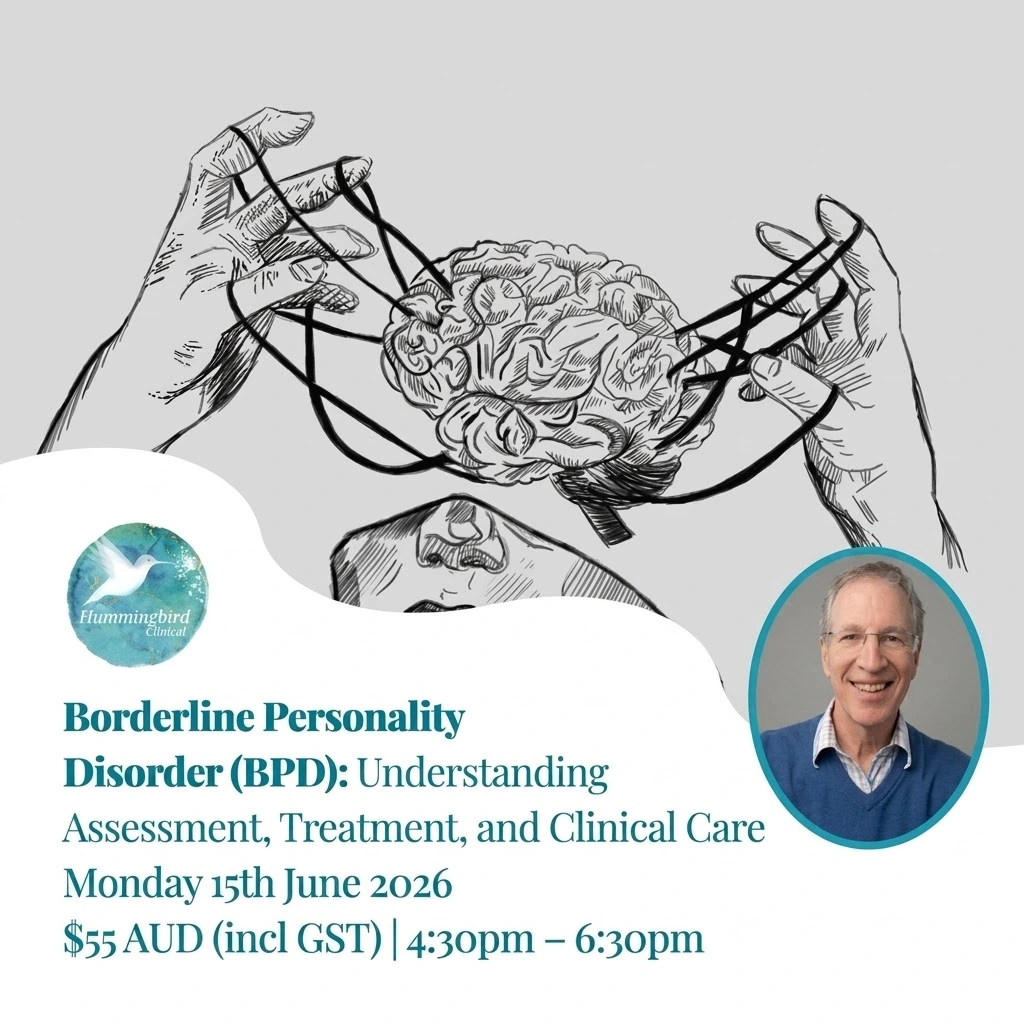

This 2-hour online workshop explores the presentation, development, and treatment of Borderline Personality Disorder (BPD), with a practical focus on supporting clinicians working with complex emotional and relational difficulties.
Topics covered include:
- Common clinical presentations and patterns
- Evidence-based psychotherapy approaches for BPD
- What different treatment models have in common
- Medication considerations and limitations
- The role of hospital and community-based care
- Prognosis and long-term outcomes
- Common challenges clinicians experience in therapeutic work, including attachment dynamics, boundaries, and maintaining therapeutic balance
This workshop is designed for mental health professionals wanting a clearer understanding of BPD and practical strategies for effective therapeutic work.
Presenter – Dr Nick Bendit
Dr Nick Bendit is a Staff Specialist Psychiatrist working at the Centre for Psychotherapy (Newcastle), an outpatient public psychotherapy unit offering long-term psychotherapy for patients with Borderline Personality Disorder (BPD) and eating disorders. He has treated patients with BPD using the Conversational Model and DBT and Group Schema Therapy, as well as supervising mental health clinicians in the management of patients with BPD. He is the current Director of Training of the Australian and New Zealand Association of Psychotherapists (ANZAP).
He has published articles on mechanisms of change in psychotherapy, reviewing the effectiveness of DBT in borderline personality disorder, and mechanisms of chronic suicidal thoughts in patients with borderline personality disorder. He has been a co-author on the most recent Australian Clinical Practice Guidelines on deliberate self-harm in borderline personality disorder (RANZCP, 2016). He is the co-author of the third-largest randomised clinical trial of the effectiveness of psychotherapy in BPD, comparing DBT and the Conversational Model (Walton et al, 2020).